

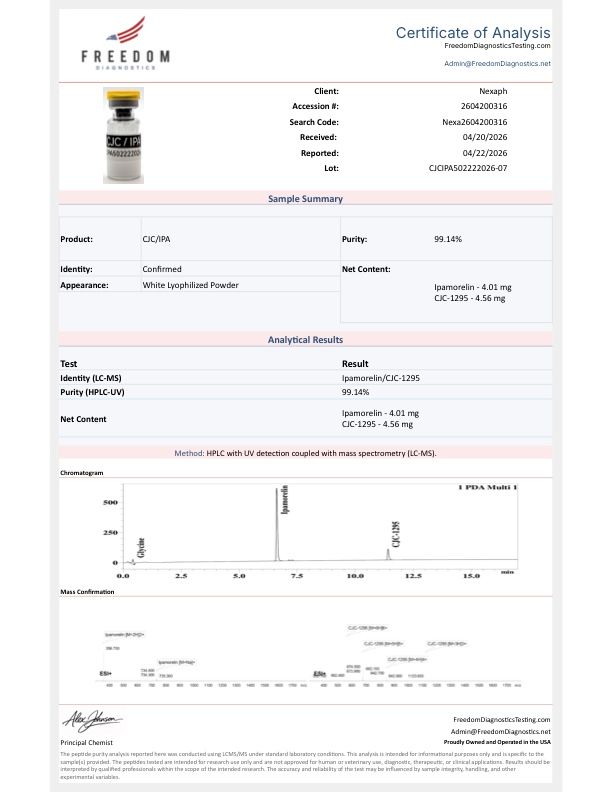
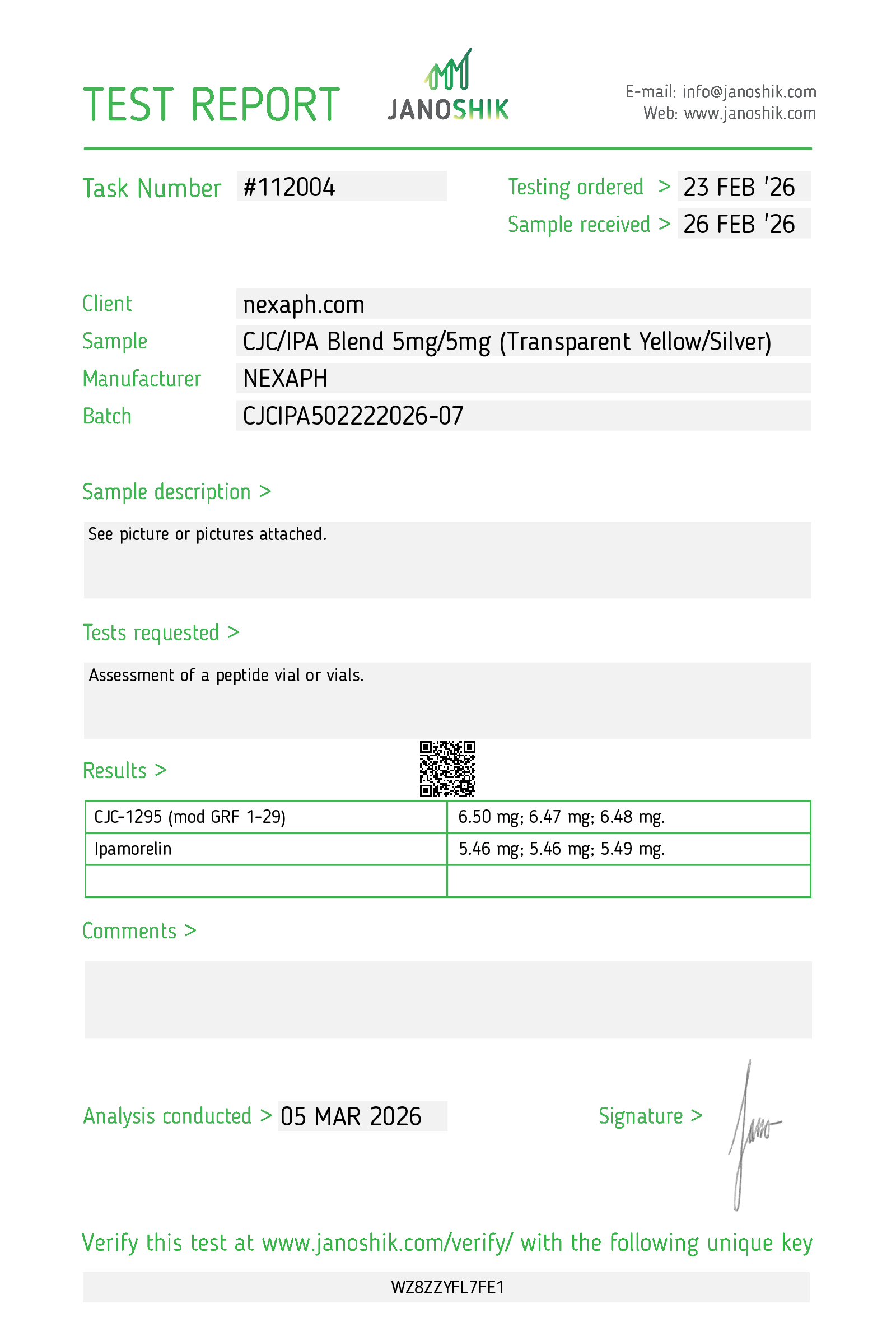
Nexaph CJC/Ipa Test Results - A Lot Lower Than Janoshik’s
-
@Commander said in Nexaph CJC/Ipa Test Results - A Lot Lower Than Janoshik’s:
@Ctrain24
What is a Patreon?It's a monthly service that allows you to support someone with payment contributions as a community.
-
I’m far from an expert especially in this field but do work a bit with testing & measurement mainly in the electrical/electronicmechanical fields - the answer may not be as simple as you think - they both may be right or even both wrong.
Different equipment measuring different things in different ways may come up with different quantities especially if they are in different countries and work to different standards even assuming all else is equal.
In Aus we have our Australia Standards (AS) for pretty much everything as do most other countries and in most cases countries sort of work to ISO’s as well which as International Standards but ISO isn’t run by any country at all really and whether it is used in the cases here or it is a requirement to legally do the work they are doing I wouldn’t have a clue.
Pretty sure the screen shots of our AS15472 relate to it but there could also be others.
The big one is even if they were identical machines and identical operators if they aren’t calibrated/tested routinely they could still give different results.Then again I could just be talking shit


-
I’m far from an expert especially in this field but do work a bit with testing & measurement mainly in the electrical/electronicmechanical fields - the answer may not be as simple as you think - they both may be right or even both wrong.
Different equipment measuring different things in different ways may come up with different quantities especially if they are in different countries and work to different standards even assuming all else is equal.
In Aus we have our Australia Standards (AS) for pretty much everything as do most other countries and in most cases countries sort of work to ISO’s as well which as International Standards but ISO isn’t run by any country at all really and whether it is used in the cases here or it is a requirement to legally do the work they are doing I wouldn’t have a clue.
Pretty sure the screen shots of our AS15472 relate to it but there could also be others.
The big one is even if they were identical machines and identical operators if they aren’t calibrated/tested routinely they could still give different results.Then again I could just be talking shit
@STATIEEIGHT
Actually what you are saying is exactly what I was thinking.
Lets say a machine is calibrated a little wrong and always comes high (but by a consistent amount) maybe Janoshik, and another machine is calibrated wrong and always comes in a little low but by a consistent amount) maybe Janoshik. Then we could for the most part factor that in.
In a few weeks when my LN order comes in, I am sending one vial to Freedom and one to BT, I want to see how those two compare. -
@STATIEEIGHT
Actually what you are saying is exactly what I was thinking.
Lets say a machine is calibrated a little wrong and always comes high (but by a consistent amount) maybe Janoshik, and another machine is calibrated wrong and always comes in a little low but by a consistent amount) maybe Janoshik. Then we could for the most part factor that in.
In a few weeks when my LN order comes in, I am sending one vial to Freedom and one to BT, I want to see how those two compare.It’s not even that they’re calibrated wrong - they may be calibrated correctly but to a different standard which is where the ISO International standard comes in.
But as long as they are actually calibrated/tested to some sort of standard even if they are both reading different- they at least should be consistently different.
If not - well then it another kettle of fish - consistency between vials in batches or even kits, operators error etc etc.
My guess is that if you send 10 vials all from the same kit to 10 different testers you’ll get 10 different results- how different would be the interesting part.
-
-
@Nugzz49 Appreciate it. Kit came in early last week and samples have already been sent to the labs.
-
Hey! This can't be the end!

Did this discussion move or get restarted under another topic?
Was the comparison test ever done?@pmcelveen Yes it was done and posted as a blog post.
-
@pmcelveen Yes it was done and posted as a blog post.
-
I agree with you. I was thinking more on the lines of he should be made aware and give you a discount for the underfills. I'm guessing this happens more than we think. Someone else had sent theirs out for testing and came back with different results as well, but it was an overfill, which impacts. Especially with peps like VIP being so strong and powerful
-
@alohayall in what way? Thats interesting I have emailed a bunch about different stuff and gotten responses right away mostly the same day. I haven’t recently so maybe something has changed



Hello! It looks like you're interested in this conversation, but you don't have an account yet.
Getting fed up of having to scroll through the same posts each visit? When you register for an account, you'll always come back to exactly where you were before, and choose to be notified of new replies (either via email, or push notification). You'll also be able to save bookmarks and upvote posts to show your appreciation to other community members.
With your input, this post could be even better 💗
Register Login