

Peptides vs Filters 0.22 vs Peptide stability
-
Has Randy ever sent back a peptide to the lab after filtration?
- A few guides have emphasised the handling of research supplies, not to shake your peptides: I was wondering the effect of forcing it through a 0.22 filter (also the types of filters (PES, PTFE, Nylon)
Thanks
-
Has Randy ever sent back a peptide to the lab after filtration?
- A few guides have emphasised the handling of research supplies, not to shake your peptides: I was wondering the effect of forcing it through a 0.22 filter (also the types of filters (PES, PTFE, Nylon)
Thanks
-
It is a good question. Possibly germane to the question is that the whole peptide fragility discussion seems largely spurious. Over the past year or so, it seems like a lot of ‘experts’ have gone from ‘treat your peptides like a precious flower’ to ‘you can drop it from an airplane’ and I have never really seen any evidence that shaking it will destroy the contents.
It is similar to the conversations about how quickly peptides deteriorate once reconstituted and whether blends destroy themselves. Both of these assertions have been clarified thanks to Randy’s work here.
And anecdotally, based on my chats with him, you can be certain any vials Jeff/Randy send into the lab have been shaken quite vigorously. :). I can say from experience that you don’t get 7 vials of epitalon into one pen cart without shaking.
-
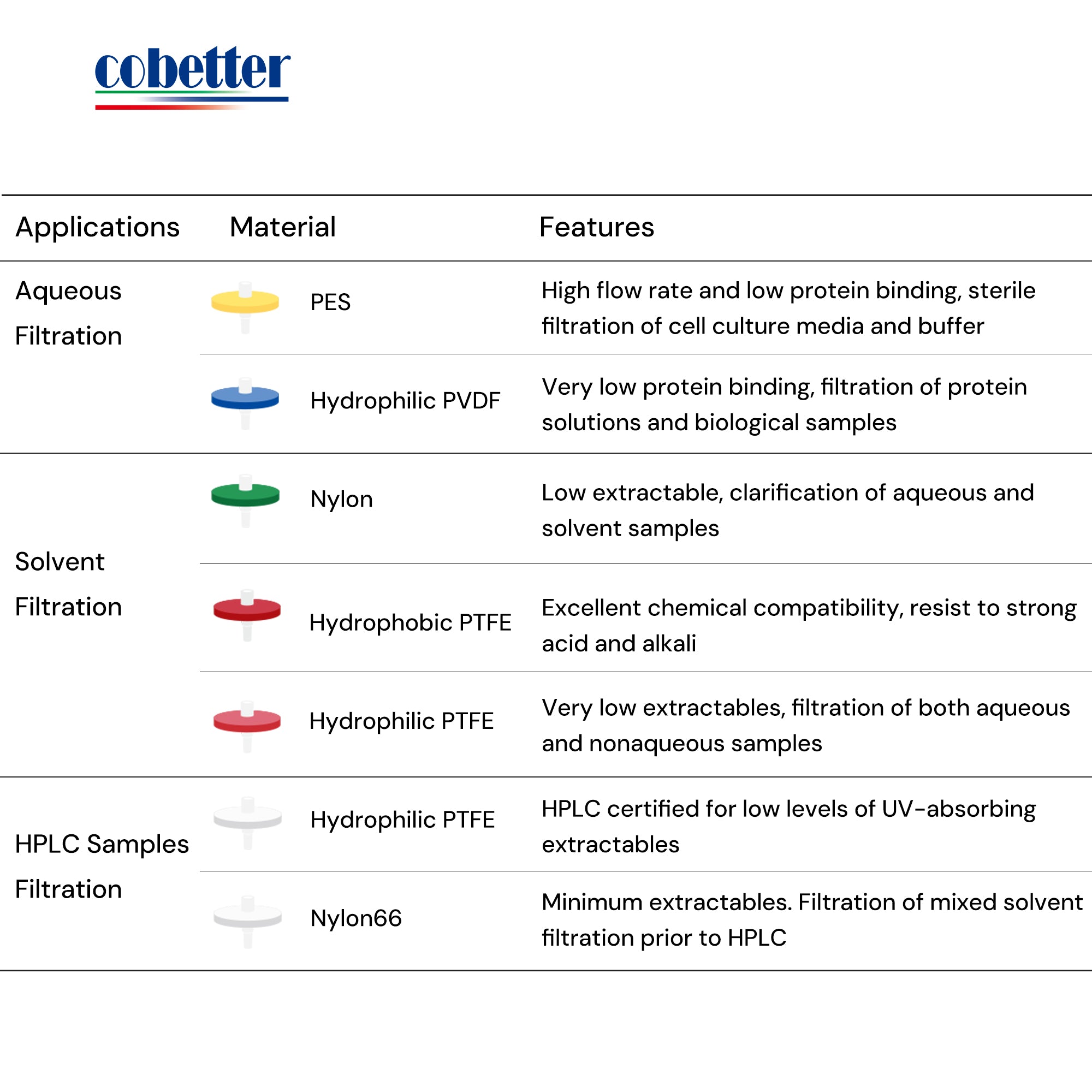
If you compare for example these descriptions for Hydrophilic PES and
Hydrophilic PVDF filters, it seems like Hydrophilic PVDF is better for peptides, allowing more peptides to get through, while filtering out cell cultures.This picture
-
Couldn't tell you myself so I AI'ed it... The answer below. Don't know this to be true but here it is.
"PES earns the top spot for one primary reason: it has the absolute lowest protein/peptide binding rate of any syringe filter membrane material available. Here's the full breakdown: simsii
The Core Reason: Lowest Peptide Loss
PES is a naturally hydrophilic polymer, meaning it readily allows aqueous solutions to pass through without "grabbing" onto the peptide molecules in solution. Other membrane materials — even hydrophilic PVDF — have a slightly higher affinity for proteins and peptides, so a small but measurable amount of your peptide gets adsorbed into the membrane and never makes it to your vial. When you're working with expensive peptides at low concentrations, every unit matters. agilent
Additional Advantages of PES
Fastest flow rate — PES filters push liquid through quicker than PVDF or other membranes, which reduces the force needed on the plunger and lowers the risk of damaging the filter seal hplcvials
Chemically inert — it won't leach contaminants into your solution or react with standard reconstitution vehicles like bacteriostatic water simsii
Non-pyrogenic — certified free of pyrogens (fever-causing substances), which matters for anything you're injecting simsii
Transparent membrane — you can visually confirm the solution is passing through cleanly simsii
Industry standard for biologics — PES is the go-to membrane in biotech and pharmaceutical labs for sterilizing protein and peptide solutions, so it's extremely well-validated simsiiThe Practical Takeaway
For your typical peptide reconstituted in BAC water or sterile water, PES simply checks every box: lowest peptide loss, fastest flow, no contamination risk, and proven sterile filtration at 0.22 µm. Hydrophilic PVDF is excellent but gets edged out on those first two points in pure aqueous applications. agilent
-
It is a good question. Possibly germane to the question is that the whole peptide fragility discussion seems largely spurious. Over the past year or so, it seems like a lot of ‘experts’ have gone from ‘treat your peptides like a precious flower’ to ‘you can drop it from an airplane’ and I have never really seen any evidence that shaking it will destroy the contents.
It is similar to the conversations about how quickly peptides deteriorate once reconstituted and whether blends destroy themselves. Both of these assertions have been clarified thanks to Randy’s work here.
And anecdotally, based on my chats with him, you can be certain any vials Jeff/Randy send into the lab have been shaken quite vigorously. :). I can say from experience that you don’t get 7 vials of epitalon into one pen cart without shaking.
@ResearchCat I just put seven vials of SS-31 into two pen cartridges. Was a little stressful but it all worked out.


Hello! It looks like you're interested in this conversation, but you don't have an account yet.
Getting fed up of having to scroll through the same posts each visit? When you register for an account, you'll always come back to exactly where you were before, and choose to be notified of new replies (either via email, or push notification). You'll also be able to save bookmarks and upvote posts to show your appreciation to other community members.
With your input, this post could be even better 💗
Register Login