MOTS-c Subcutaneous Research Dosing Protocol
-
This is awesome and looking to go there. Curious what your age is for context?
@harrisfrank said in MOTS-c Subcutaneous Research Dosing Protocol:
This is awesome and looking to go there. Curious what your age is for context?
65 years old. Feel awesome. Doing "all the things".
BTW and while I am posting, I have updated my regimen to 2.5mg MOTS every day. I have found, for me, back of the arm results in essentially no ISR, no pain, no itch. I would not have tolerated this protocol when starting out. With that said, 5mg EOD gives more of a "rush" (which some enjoy, some do not).
-
Have you had any problems with going IM on back of arm? I had to stop when I lost weight because my Tirz was hitting muscle and I was bruising since I can’t pinch and shoot. Or are you using a short needle so no problem? Thx.
(For Tirz, subjectively, back of arm is my preferred location. Now doing muffin top. Still effective, but I need all the real estate I can get.
 )
) -
Have you had any problems with going IM on back of arm? I had to stop when I lost weight because my Tirz was hitting muscle and I was bruising since I can’t pinch and shoot. Or are you using a short needle so no problem? Thx.
(For Tirz, subjectively, back of arm is my preferred location. Now doing muffin top. Still effective, but I need all the real estate I can get.
)@ResearchCat said in MOTS-c Subcutaneous Research Dosing Protocol:
Have you had any problems with going IM on back of arm? I had to stop when I lost weight because my Tirz was hitting muscle and I was bruising since I can’t pinch and shoot. Or are you using a short needle so no problem? Thx.
(For Tirz, subjectively, back of arm is my preferred location. Now doing muffin top. Still effective, but I need all the real estate I can get.
)Short needle 5/16", never an issue (so far) keeping it sub-q and no accidental IM. Least ISR's, easiest skin to penetrate.
-
edit ignore this comment. I’ve found studies that contradict this information. Look at my comment below.
Yesterday Dr Sawicki posted a short on YouTube about how antioxidants block Mot-C from entering cells. She recommended taking Mot in the morning and taking antioxidants and any of their precursors at night. Just throwing this information out there.
Mot-C half life is 4.4 hours. The half-life of NAD+ is estimated at 1 to 2 hours in the nucleus and cytoplasm, and up to 8 hours in the mitochondria.
My take away is dose Mot-C first thing in morning and NAD+ 6-8hrs later.
https://youtube.com/shorts/W2a9qZ7vP1k?si=LHLm4izgWK7cxms1 -
Has anyone done SS-31 along with MOTS-C?
I'm thinking about an SS-31, MOTS-C, NAD+ cycle.
-
Has anyone done SS-31 along with MOTS-C?
I'm thinking about an SS-31, MOTS-C, NAD+ cycle.
@justalittleprick there are some pretty common protocols that use all three. I started MOTS-C at the end of my SS-31 cycle and am researching MOTS-C and NAD+ together.
A friend recently finished the SS/MOTS/NAD 12 week cycle and loved it. Said it gave him tons of energy.
-
@myb I think it may be that NAD+ is not actually an anti-oxidant itself, but rather optimizes conditions for your bodies own production and recycling of glutathione. I would expect there to be other rate limiters in there that would prevent a super-physiological bollus of glutathione from those improvements, and thus you may not get the issues you would get from simply injecting glutathione directly. Please note: this is all kobbled together in my brain from some fly by research, so take this less seriously as 'reality' and more as 'speculation'.
-
@peptideed i followed the phd lady’s train of thought and it made sense. After your comment I decided to dig deeper and found studies that conflicted the information originally provided. They use different pathways so can actually be used together.
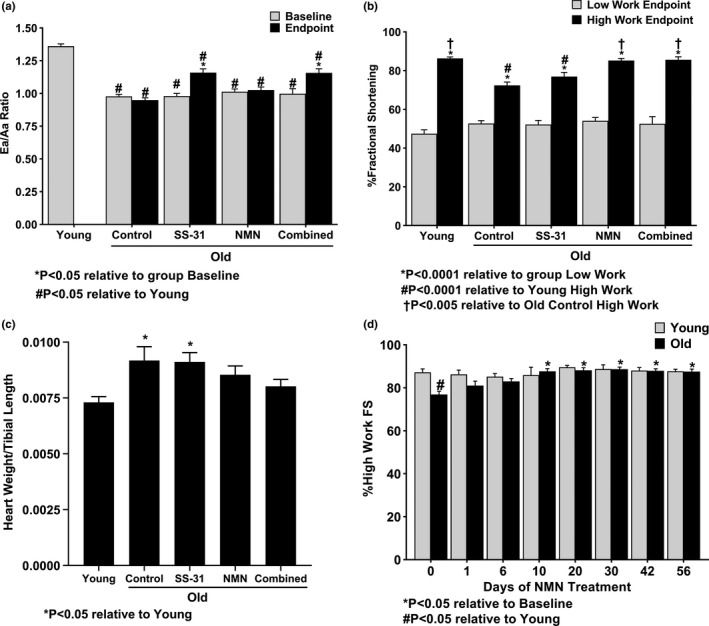
“The effects of the mitochondrial‐targeted drugs SS‐31 and NMN were tested on aged mouse hearts. It was found that SS‐31 restores diastolic function, while NMN restores high work systolic function. Both drugs normalized PCr/ATP dynamics and increased mitochondrial NAD(P)H levels in response to a work jump. NMN also raised NAD+ levels during the work jump. When given in combination, the drugs increased resting NAD(H) levels, indicating a synergistic effect.” https://pmc.ncbi.nlm.nih.gov/articles/PMC7576234/#:~:text=The effects of the mitochondrial,levels%2C indicating a synergistic effect.
-
P PeptideCritic moved this topic from Growth & Performance